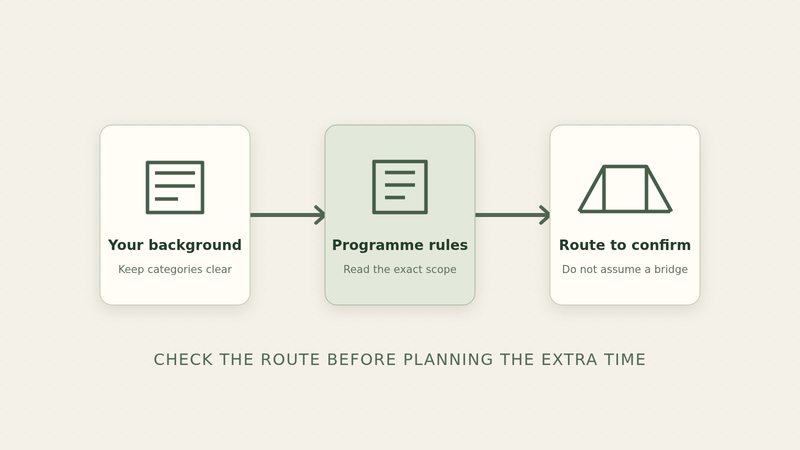
The University of Helsinki's National Language Scholarship is tied to completed language studies and a later attendance condition. For a tuition-fee-liable master's student, it belongs in a conditional future-payment plan, not among the funds already available for starting the degree.
This guide concerns the university's published scheme for study rights beginning in 2026 or later. Official instructions were checked on 5 November 2026. It does not confirm an individual's eligibility, course place or award, and it does not resolve separate tuition, deferral or immigration questions.
Establish which award you are planning around
The university lists its National Language Scholarship among scholarships available during studies. It is a different question from applying for a tuition waiver when seeking admission.
Under the current tuition-fee-liable student guidelines, the language scholarship is €800 per eligible academic year. The conditions include tuition-fee liability, a study right beginning in 2026 or later, and at least five credits of Finnish or Swedish language courses completed at Helsinki during one academic year.
Those credits must be in one language: Finnish and Swedish cannot be combined to reach the threshold. Payment also depends on being registered as attending in the following academic year's autumn term, and is made to a Finnish bank account.
Check the applicable instructions against your own study right and planned completion period. Do not substitute another university's language incentive, or assume that a course attended elsewhere has the same treatment.
Put learning before the credit total
Choose a language you intend to keep using, then investigate the appropriate starting level and course sequence. A plan built only around reaching a credit threshold can leave the actual learning goal unclear.
For example, identify a modest task you would like to practise: introducing yourself, understanding a simple everyday exchange or describing your studies. These are original preparation prompts, not claims about what a particular course certifies. Your current level and the course's learning outcomes should guide the choice.
The university's Finnish for International Students page separates degree-student and exchange-student course information. Use the section relevant to your status, then check the actual course version, level, credits and registration instructions.
That page currently contains autumn 2026 schedules. They are not an invitation to register after a past deadline or a confirmed timetable for 2027. Nor does a publicly listed group establish that you have a place. Check current arrangements before entering a course as a firm commitment.
Fit language study into the master's workload
Compare the proposed classes, independent practice and assessment with the work already required by your degree. Ask the university how the courses fit your study plan; do not assume that every language credit replaces a compulsory master's module.
Make a small planning record:
- Learning aim: what you want to understand or communicate, and your present starting point.
- Course evidence: exact unit, language, credits, academic year and current course information.
- Access: the registration route and your actual confirmed place, with unresolved questions visible.
- Study fit: teaching and assessment commitments alongside your degree requirements.
- Completion evidence: the university record of the eligible studies, not simply a plan to attend.
- Award check: applicable conditions, later attendance status and payment procedure still to be confirmed.
Keep proposed courses outside the completed-credit total. A registration request, an accepted place and successfully completed study are different stages. This record helps you ask a precise question without pretending to make the university's assessment.
Separate the study year from the payment autumn
The official example places qualifying language study in 2026–2027 and the payment in autumn 2027, subject to attending status then. The important budgeting distinction is the gap between doing the work and receiving the money.
For a family comparing cash requirements, put the expected study period and the potential payment period on separate lines. Tuition, rent or travel due earlier still needs its own confirmed funding. Do not use a conditional later receipt to close an immediate funding gap.
Use the whole-study budget guide to keep gross costs, available funds and pending awards separate. If payment timing or your status is uncertain, show that uncertainty explicitly instead of quietly subtracting the amount from the first bill.
This guide has not tested a payment process or opened a bank account. Establish the university's actual administrative requirements through its official instructions; a private planning table is not an award notice.
Check the next year before assuming another payment
The current rules permit repeated awards only if the conditions are met each year and the language remains the same across years. Do not plan a second award by switching from Finnish to Swedish, or add another payment merely because you expect to keep studying.
The later attendance condition matters when your master's is approaching completion. Check the real graduation plan and the university's treatment of your circumstances. This article does not establish that a former student remains eligible, that a payment survives graduation or that extending enrolment is possible or worthwhile.
Keep the academic completion decision separate from a hoped-for award. An extra study period can carry its own costs and requirements; no calculation here justifies changing a degree plan to seek €800.
Keep language learning and employment evidence separate
Learning a local language can be part of your personal study goals, but completing the scholarship's credit threshold does not prove the proficiency required by an employer. Investigate the actual role and its language requirements separately. Our teaching versus workplace language guide explains that distinction.
Next action: choose a realistic language-learning aim, verify the relevant course sequence and award conditions, and place any possible payment in the correct later period. Build the starting budget from confirmed resources while you investigate what the language study would add to your degree experience.
Research checked 5 November 2026. AI-assisted editorial research and original planning record. No real student story, individual scholarship assessment, tuition reduction or employment outcome is represented.