At Aalto University, choosing not to publish the full thesis openly online does not make the approved thesis a confidential document. The university distinguishes the public status of the thesis from permission to distribute its full text through Aaltodoc. A company project therefore needs a workable information plan before you commit to a topic.
This guide checks Aalto's public-document instructions, its library publicity and publishing guidance, and the Information and Service Management thesis instructions on 6 November 2026. It explains the university's published study process. It does not interpret an individual agreement or establish that a particular company project is available or approved.
Separate public access from open online publishing
Aalto's instructions say the thesis submitted for evaluation must not include secret information. Its library guidance explains that an electronic thesis can be provided to someone requesting it even when the author has not made the full text openly available online.
That distinction changes the planning question. “Can I switch off public downloads?” is not the same as “Can the evaluated thesis contain information that the company requires to remain secret?” A restricted online full-text setting cannot answer the second question.
The library says the catalogue details and abstract remain publicly visible regardless of the full-text online choice. Do not plan a revealing title or abstract on the assumption that declining open full-text publication will hide every part of the record.
The useful next step is to identify what the academic argument needs to disclose, not merely to choose an archive setting at submission time. Check the actual current instructions for your programme; do not transfer these Aalto rules to another university.
Agree an academically viable question before accepting commissioned work
The Information and Service Management instructions tell students to discuss a proposed topic with the supervisor before accepting commissioned work. They also direct students doing company work to establish that the topic and thesis meet the degree requirements.
A commercially interesting problem is a starting point. It still needs a question, method and body of evidence that can support an assessable thesis. If the organisation expects a private operational report while the academic work must be public, identify that difference early.
For example, a hypothetical project might investigate how a decision process works without publishing a client's commercial figures. Whether that is academically adequate depends on the actual question, evidence and supervisor's assessment. Do not assume that removing names, replacing a table or promising a separate report will automatically produce an acceptable thesis.
The supervisor may help establish academic feasibility. That discussion does not itself settle every company permission, data-access or agreement question. Keep the responsible parties and unresolved decisions visible.
Draw the boundary between thesis and background material
Aalto distinguishes separate background material containing commercial secrets from the thesis submitted for evaluation. Do not interpret that as permission to hide an essential part of the academic reasoning in material the public thesis cannot explain.
The ISM page further excludes separate confidential deliverables for the commissioning organisation from the graded work. Plan an assessable thesis, not a thin public summary that depends on an ungraded private report.
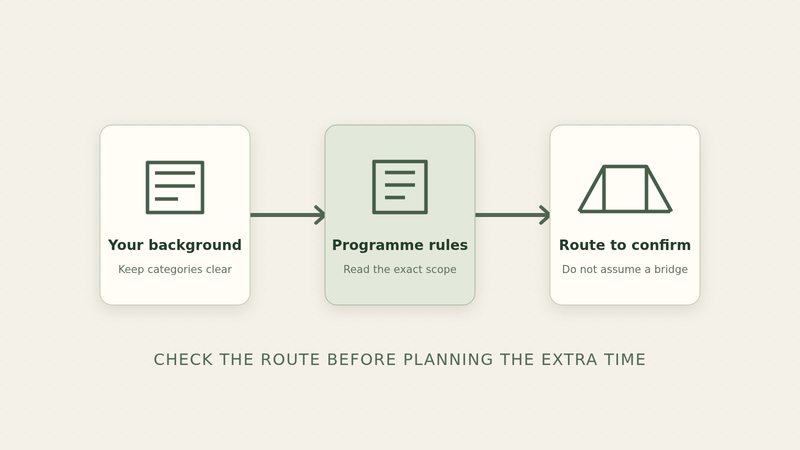
Use an original information map before starting the work. For each proposed input or output, record:
- What it contributes to the research question.
- Who controls access and what permission has actually been given.
- What would need to appear in the evaluated thesis.
- Whether any supporting material must remain separate.
- Which academic or company decision is still unresolved.
This is a discussion aid, not a confidentiality classification or a university-approved form. Use descriptions of material in the planning record rather than circulating the underlying company files unnecessarily.
A useful test is to explain the intended public argument without showing a confidential attachment. Can you describe the question, method, limitations and supported conclusion coherently? If you cannot yet do that, the topic may need redesign or a different evidence source. Do not fill the gap with invented findings.
Check the title and abstract as well as the main chapters
A project can reveal more than expected through its title, abstract, figures or description of the setting. Review the proposed public components together, using the university's instructions and the actual permissions that apply.
Keep claims proportionate to the evidence that can be assessed. A hypothetical demonstration using clearly labelled invented data can illustrate a method; it cannot be presented as results from a real organisation. Likewise, a general description of a process should not imply that the company authorised publication of its internal performance.
Our research-supervisor guide can help you prepare a focused academic question without sending private employer records in an initial enquiry. The existing Aalto ISM study-profile guide addresses the earlier curriculum decision; it does not confirm company access or thesis approval.
Resolve publication questions before the final archive step
The library guide says an approved thesis file cannot be corrected or changed after archiving; errors are handled through errata. Treat that as a reason to resolve the information boundary before final submission, rather than expecting an archive preference to repair an unsuitable disclosure later.
Keep three decisions separate in your own record: approval of the academic topic, permission to use the relevant material, and the applicable publication arrangements. An encouraging company conversation is not evidence that all three are settled.
The library page displays a last-updated date of 5 November 2026, while the university's general public-document page carries an older update date. This article uses them as current published instructions checked today; it does not claim that a new confidentiality policy began yesterday.
Preserve a truthful account of your learning
A company-connected thesis may help you practise research on a relevant problem. That does not establish a paid role, employer endorsement, sponsorship or a graduate job offer.
Before relying on the work for future applications, identify what you could legitimately explain about your own contribution. A public thesis being accessible does not mean its contents or a company's underlying material are freely reusable in every other context. Check the relevant permissions instead of copying records into a portfolio.
Use the job-search evidence guide to distinguish learning you can substantiate from outcomes you hope to achieve.
Your next action is one information map reviewed before committing to the commissioned topic. If the research cannot yet be assessed without prohibited disclosure, keep the project unresolved and investigate a workable scope. Choosing an online publication setting comes later.
Prepared with AI assistance from the linked primary university sources. The information map and hypothetical examples are original editorial interpretation. No private agreement, company dataset, student experience or individual outcome has been assessed.