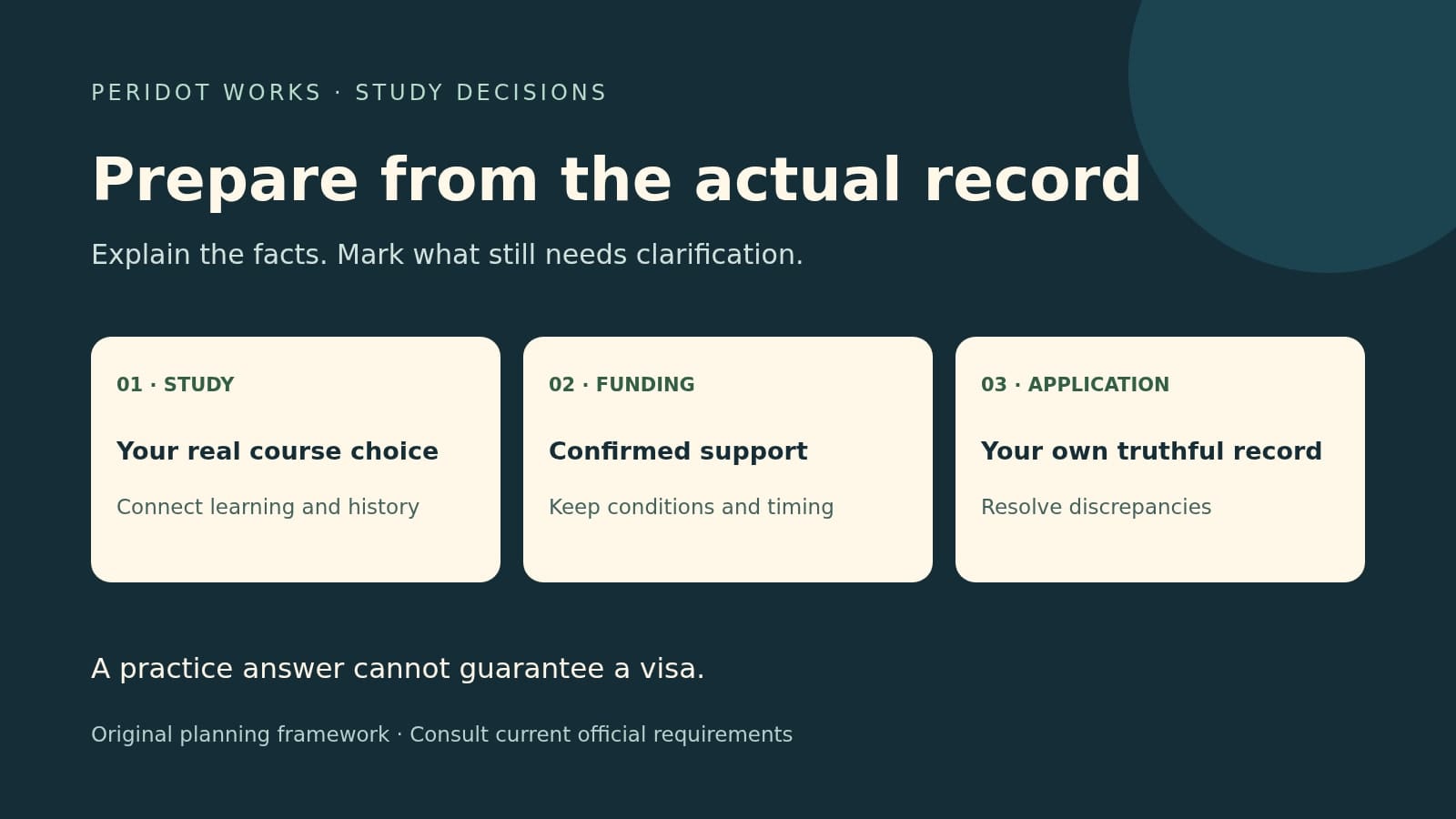
Prepare for a US student-visa interview by understanding your actual study choice, funding and plans, then checking that your explanation agrees with your documents. A memorised answer cannot establish eligibility, and a university admission offer is not a visa decision. The consular officer assesses the application under US law.
A useful practice session is therefore an evidence check rather than a search for the perfect script. Can you explain why the specific master's fits your preparation? Can you identify how the educational, living and travel costs will be paid? Do you understand what you submitted on the application, including any unresolved or changed information?
Scope: general preparation for a prospective F-1 master's student, checked 20 October 2026 against the linked Department of State and EducationUSA guidance. Follow the current instructions of the embassy or consulate handling your application. This is not an individual visa assessment, a complete local document checklist or a prediction of the questions you will be asked.
Begin with the official application record
The Department of State student-visa guidance lists required documentation and explains that additional evidence may be requested. Its examples include academic preparation, intent to depart after the course of study, and how educational, living and travel costs will be paid.
Those are areas to understand, not a guaranteed interview sequence. Do not turn them into a rule that every applicant must give the same answer or carry the same additional document. The exact route, circumstances and local instructions matter.
For your own preparation, make a private record with three columns: the point you need to explain, the actual supporting evidence, and anything still unresolved. Do not put passport details, financial records or visa history into public comments or a shared practice group.
Explain the course you actually chose
Start with the programme name, institution and the learning you intend to undertake. Connect the curriculum or assessed work to your real academic background and goals. Use the course-comparison framework to revisit the reasons you selected it; do not invent a reason because it sounds more impressive in an interview.
The DS-160 FAQ tells student applicants to have the I-20 available when completing the application because it contains the SEVIS ID and school information needed. Check the actual record instead of answering from an old shortlist or an earlier institution's documents.
If something important has changed, identify the discrepancy and follow the relevant official correction instructions. This article does not prescribe how to alter a submitted application or whether a particular change requires another appointment.
Know the funding facts, including their limits
Prepare to explain the real funding arrangement and the evidence available for it. Separate the amount and timing of confirmed support from an application for a scholarship, an unapproved loan or an expected part-time job. A possible future income source is not the same as money already confirmed for the plan.
Use the education-loan payment timeline to distinguish a sanction from the conditions and timing of disbursement. This does not establish what evidence the consular officer will accept in an individual case; it helps you avoid describing different funding stages as if they were identical.
A practical rehearsal question is: can I explain who is funding the study, what is confirmed, when it becomes available and which document supports that statement? If you cannot, resolve the real uncertainty with the appropriate institution or qualified adviser. Do not fill the gap with a fictional sponsor, unexplained funds or a copied answer.
Your application and your explanation must remain yours
State's DS-160 FAQ says the electronic signature certifies that the applicant has read and understood the questions and that the answers are true and correct to the best of their knowledge and belief. Assistance does not make an inaccurate statement safe to submit or repeat.
Read and understand the application record before practising. Explain genuine plans without inventing employment, family circumstances, qualifications or intentions. If your actual circumstances raise a consequential uncertainty, get appropriate advice about the facts; an article cannot supply a different personal history or determine how an officer will assess it.
For the interview document set, State's FAQ distinguishes the DS-160 confirmation page from printing the entire application. It says the confirmation page is required to retrieve the record. Check that you have the right confirmation and the other documents required by your actual local instructions, rather than assuming a thick folder substitutes for completeness.
Practise for clarity, without predicting approval
EducationUSA's student-visa guidance encourages applicants to explain the study choice, financial support and plans after study clearly because interviews are short. Practise expressing those real facts concisely, in language you understand. Do not learn a paragraph that you cannot explain when asked a follow-up question.
Keep three different decisions separate: the university's admission, the consular visa decision and permission to enter at the US border. State says a visa does not guarantee entry. It also advises against final travel plans or buying tickets before a visa is issued; no approval date or processing time is promised here.
Your next action is one evidence review: mark each study, funding and application statement as supported, needs clarification or changed. Resolve the marked items through the appropriate official or qualified route before relying on a practice answer. The goal is a clear account of your actual case, not a performance designed to guarantee an outcome.
Method: original Peridot Works synthesis prepared with AI assistance from the linked primary guidance. No private applicant record, interview transcript, approved-case story or visa success rate is represented.