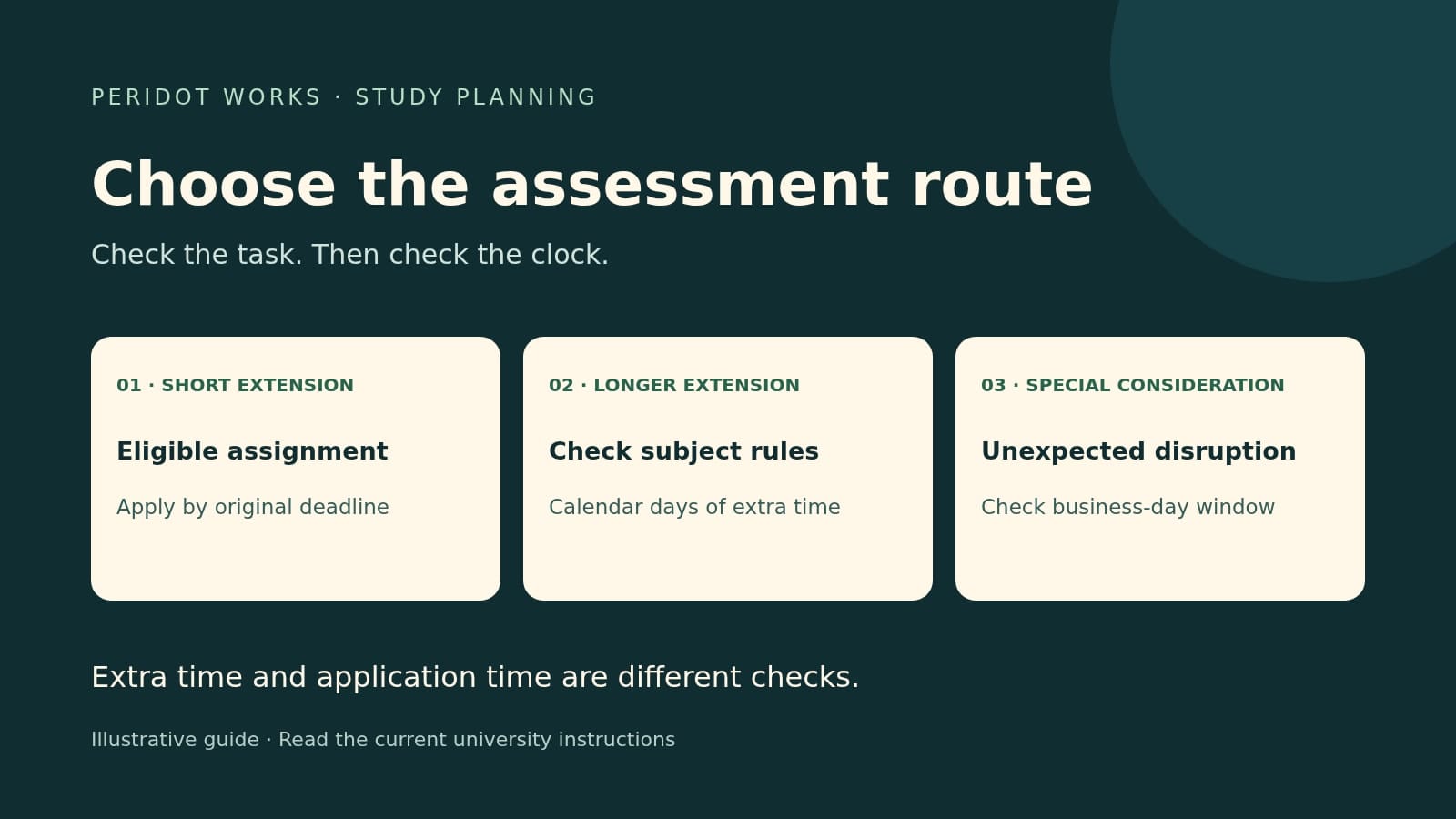
An unexpected disruption near an assignment deadline creates two separate questions: what adjustment could apply, and when must you request it? At the University of Melbourne, a short extension, a longer extension and special consideration have different scopes. Choosing a route by its name alone can leave you checking the wrong deadline or assuming an assessment is eligible.
This guide explains the university’s published routes checked on 17 October 2026. It does not determine your eligibility or calculate an individual deadline. Use the current subject instructions and official application guidance for your assessment.
Start with the assessment and its original deadline
Write down the subject, assessment type, original due date and time, and the disruption’s effect on preparing or completing the work. Keep personal supporting documents separate from an informal shortlist or counselling worksheet. The university’s designated process should tell you where to submit them.
A submitted assignment is not the same as an examination, presentation or group assessment. Melbourne’s short-extension guidance excludes group assessments, examinations, quizzes, tests, practical examinations, oral presentations, exhibitions and written assignments due in class. Check the actual assessment’s eligibility rather than assuming every task in a subject uses the same route.
A short extension has an earlier application gate
For an eligible submitted assignment, the short-extension page describes three calendar days without supporting documents; the application instructions allow a requested due date within one to three calendar days of the assessment deadline. You must apply by the original assignment deadline. Supporting documents are not required for an eligible short-extension application under this route.
That does not mean an application made after the deadline becomes a short extension automatically. The short-extension page directs students whose deadline has already passed to apply for special consideration, which may award an extension. Do not treat a missed short-extension deadline as permission to select an ordinary longer extension instead. Nor does a short extension cover every assessment that happens to be submitted electronically. Read the exclusions and the subject’s eligibility information first.
A longer extension changes the due date
Melbourne’s extension guidance describes extensions of four or more calendar days. An extension changes the submission date for an assessment; it does not change its learning outcomes, assessment requirements or marking criteria.
Eligibility and the maximum extension can vary. Supporting documents may be required, depending on the applicable route and faculty requirements. Scheduled assessments such as examinations or practical assessments may need a different adjustment process. A request for more time should therefore identify the specific assessment and the relevant published rules, rather than treating an extension as a change to the whole subject.
Special consideration is assessed case by case
Special consideration concerns unexpected circumstances affecting preparation for, or completion of, assessment. It can cover assignments, examinations, attendance requirements and other scheduled activities. Supporting documentation is required, and the university determines the outcome for the circumstances and assessment.
Possible outcomes include an extension or a replacement assessment arrangement. A preferred outcome is a request, not a promise. Do not plan on receiving extra marks, a particular examination format or your chosen adjustment simply because you have applied.
An ongoing need for academic support is a separate planning question. The existing disability-support planning guide uses Leeds as its institutional example; its registration process should not be imported into Melbourne’s rules.
Keep calendar days and business days separate
The special-consideration page requires an application no later than four business days after the assignment due date or missed class. The Extensions page separately gives a four-business-day application limit after an assignment due date. That wording does not remove the short-extension page’s direction to use special consideration after the deadline. These application windows are different from the number of calendar days of extra time requested.
The application instructions say to submit by the application deadline even if required documents are not ready, then upload the documents within four business days of submission. That second clock starts at submission, not at the assessment deadline. The supporting-document guidance permits a Statement of Impact for some faculty-specific extension requests, with different limits; other faculties do not accept it. Post-deadline documentation follows special-consideration requirements. Check your faculty, assessment limit and circumstances rather than assuming self-evidence is always accepted. Late applications are accepted only before subject results, where you could not apply on time and supporting documents confirm the impact; applications after results are not accepted. If holidays, time zones or the assessment’s timing make your deadline unclear, ask the university rather than using a guessed date.
Make a five-field action record
Record: the assessment and original deadline; the route you are checking; its application deadline; the supporting-document requirement and submission route; and the university response still needed. This is a planning record, not an eligibility decision.
Before a course begins, the assessment and workload comparison guide can help you identify unfamiliar assessment formats. Once disruption occurs, switch to the current university process. An application receipt confirms submission; it does not confirm approval or suspend the original requirements by itself.