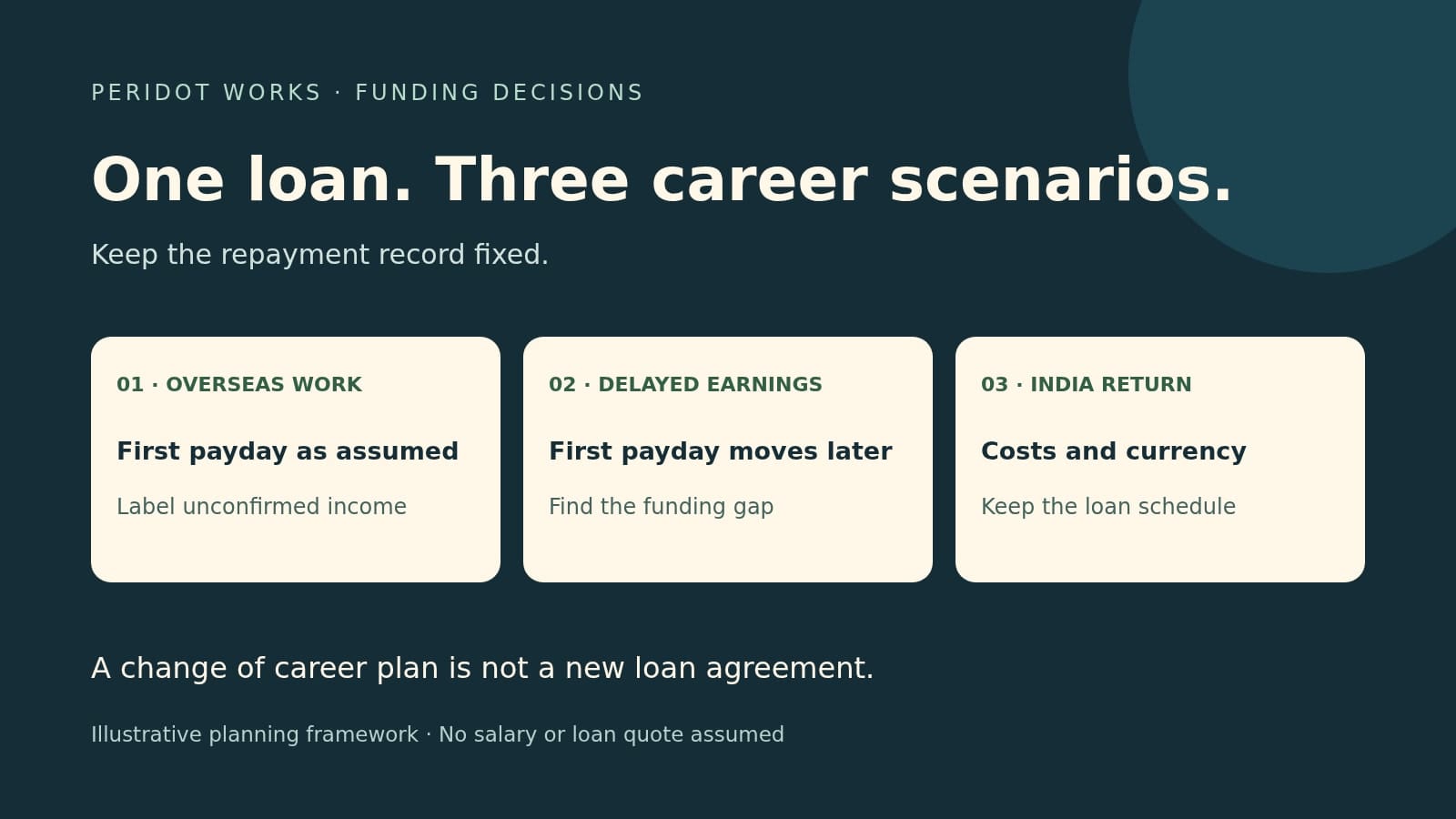
A repayment plan can look comfortable when it assumes an overseas job begins promptly. Before committing to a master's, test what happens when the first salary arrives later or the graduate starts work in India instead. Change the career scenario without quietly giving the loan a longer holiday, a smaller balance or a different repayment date.
This is a comparison method, not a borrowing recommendation or a prediction of earnings. It complements the education-loan payment timeline, which covers approval and disbursement. Here the decision is whether the same borrowing proposal remains fundable across different post-study circumstances.
Make one contract record before making three scenarios
Use the applicable written lender proposal and repayment schedule. Record the amount and dates of actual or proposed disbursements, the interest basis and reset conditions, payments during study, treatment of unpaid interest, first instalment date and repayment period. Identify the currency in which each obligation must be paid.
Keep those entries identical across the comparison. A career scenario does not itself establish a change to the loan agreement. If the lender offers a different arrangement, document it as a separate proposal rather than inserting it into only the difficult scenario.
Checked on 17 October 2026, SBI's Global Ed-Vantage product page says repayment starts six months after course completion. It describes simple interest during the course and moratorium, with accrued moratorium interest added to principal for repayment. This is a product-specific illustration, not a rule for all education loans or confirmation of your sanction terms.
SBI's broader repayment guidance distinguishes overseas study from other categories. Do not borrow a more convenient repayment holiday from another category, or assume repayment waits indefinitely for employment. Ask the sanctioning branch to confirm the schedule applicable to the actual proposal.
Keep the debt record separate from the spending record
Your debt record answers what you owe and when. Your spending record answers how you will cover that obligation alongside essential living costs. A smaller rent bill does not reduce the contractual loan balance; a larger loan balance does not by itself tell you how much cash is available for next month's payment.
Ask for the balance used to calculate instalments and how it treats unpaid interest. Do not estimate total interest simply by multiplying the original sanctioned amount by a headline rate and the entire course length: disbursement dates, rate changes and actual payments can matter. Use the lender's applicable schedule rather than presenting an informal estimate as a quote.
Scenario one: overseas work begins as hoped
Write the assumed work-start and first-payday dates separately. For a real offer, use the contract and confirmed payroll information. For a prospective student without an offer, label both dates hypothetical and leave future salary unknown rather than substituting a brochure figure.
List the funding needed until the assumed first payment, then the essential commitments afterwards. If earnings and repayments use different currencies, retain both original currencies and state the conversion assumption. The exchange-rate budget guide explains why a single conversion should not be treated as a forecast.
Scenario two: the first payment arrives later
Keep the same loan schedule. Move the assumed earnings date later and identify which extra payments and living costs now need another funding source. Count only accessible funds or support actually agreed for that purpose; a hoped-for scholarship, additional borrowing or family contribution remains unresolved.
For each affected month, record the payment due, essential costs, confirmed receipts and remaining accessible funds. The post-study funding-runway guide develops that cash-flow method using a UK example. Its immigration rules are not a permission statement for another destination or a future application date.
Scenario three: the first job is in India
Keep the repayment terms again. Replace the living-cost assumptions with the actual India plan and include any relocation costs or overlapping commitments abroad. Do not assume returning means free housing, immediate employment or a particular take-home salary. Confirm any family support before counting it.
If an actual Indian job offer exists, compare money available after essential costs and applicable deductions with the payment schedule. If it does not, show the unfunded period and mark income unknown. Returning can change costs and currency exposure; it does not answer the repayment question by itself.
End with a decision, not a reassuring average
Bring the three scenarios together without averaging away a shortfall. Which month first lacks confirmed funding? Which assumption creates that gap? What evidence would resolve it? A dated lender clarification, a revised study option or an agreed funding contribution is more useful than a general claim that graduates usually manage.
Keep personal loan statements, account details and income documents in appropriate private channels, not public comments. Take the contract record and unresolved questions to the lender and the people funding the plan. If a material gap remains, keep the borrowing decision open. The exercise supports a clearer conversation; it does not certify affordability or guarantee an overseas or Indian job.