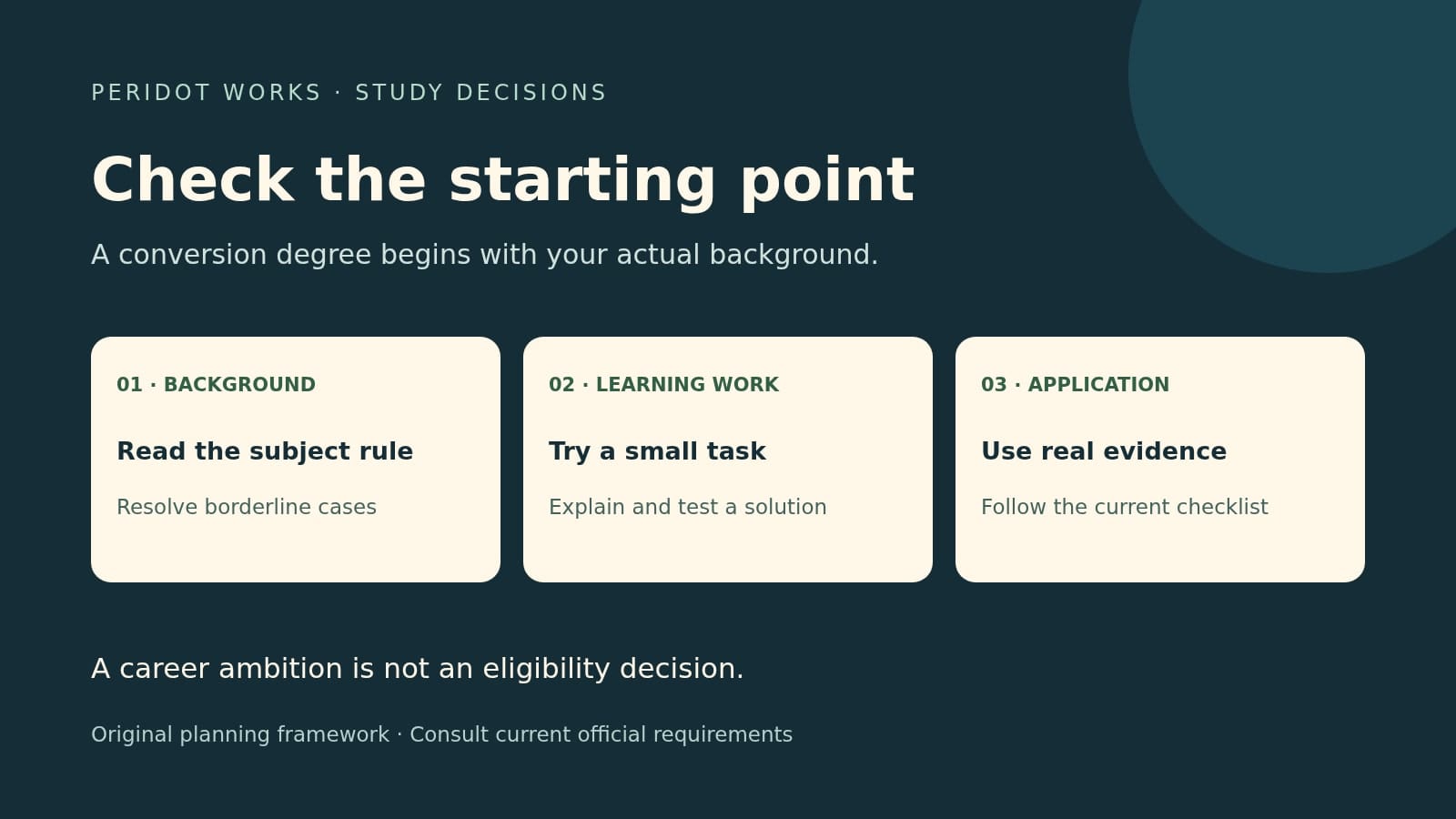
A conversion master's is designed around a particular starting point. At Bristol, the MSc Computer Science (Conversion) is intended for graduates moving into computing from another academic area. Someone who already holds a related computing degree should not assume that the course is simply an alternative advanced-computing option.
This guide uses Bristol's September 2027 programme page and its linked 2027 admissions statement, checked on 18 October 2026. It helps you investigate eligibility and learning fit; it does not decide an individual application or establish that a computing career change will lead to a job.
Read the entry rule before the module list
The current programme page normally asks for an upper second-class degree or international equivalent in a subject unrelated to computer science. It explicitly excludes computer science and related degrees, naming examples including computer engineering, actuarial science and software engineering.
If your degree's title or content sits near that boundary, take the uncertainty to admissions. Do not relabel a qualification to make it appear unrelated. Equally, do not infer your status from another graduate's experience or a broad description of your country’s degree system.
Create a short evidence note with the official qualification title, awarding institution, relevant modules and the precise question you need answered. Keep the transcript itself private. The course-comparison guide can organise a shortlist, but the receiving university determines how its requirements apply.
Test whether you want to do the work
Bristol assumes no previous programming knowledge but encourages prospective applicants to try a basic programming course. Its published structure includes C and Java, individual and group work, and a substantial summer project. Starting from first principles still involves sustained practical work.
As an original preparation exercise, choose a small task with synthetic information: for example, organise a fictional library catalogue or check a simple list for duplicate entries. Explain the inputs, the result you want and the cases that could go wrong. Try a small implementation at an appropriate beginner level, then describe one error you found and how you investigated it.
The point is not to impress admissions with a large portfolio or claim a skill you have just encountered. Notice whether you enjoy breaking down a problem, reading an error message, revising a solution and explaining why it works. Record the concepts you still need to learn. This exercise is editorial guidance, not a Bristol assessment or an additional application requirement.
Connect your previous field without inventing experience
Your earlier studies may supply questions you would like to investigate through computing. A humanities graduate might be interested in organising text; a science graduate might want to process experimental data. These are hypothetical learning interests, not claims about successful applicants or approved dissertation topics.
Write a factual account of what you studied, what has led you towards computing and what preparation you have actually completed. Separate curiosity from proficiency. A short exercise does not make you an experienced developer, and a career aspiration does not establish an entry requirement has been met.
Use the current document instructions
The 2027 admissions statement, version 1.0 dated September 2026, applies to its stated application period. It identifies required academic and English evidence, while a CV and personal statement are optional. It also describes case-by-case consideration of non-standard qualifications.
Do not assume an optional statement is a substitute for a required certificate, or that a non-standard review automatically overrides the prospectus's subject restrictions. Ask about a genuine uncertainty and provide accurate evidence. Avoid adding unnecessary documents simply because a generic application checklist elsewhere requires them.
Use the statement-of-purpose evidence guide if you choose to explain your background. It supports truthful preparation; it does not change Bristol's document policy or guarantee that an explanation will alter the decision.
Keep learning fit separate from employment evidence
An implementation project can help you practise building, testing and communicating a computing solution. To judge career relevance, compare those activities with current requirements for the roles and locations you are actually considering. Look separately at programming fundamentals, evidence of practical work, experience, language and any applicable work authorization.
The programme's career descriptions are not a current placement-rate study. This review has not independently established programme-level hiring outcomes or that employers will accept this route for your intended role. Use the graduate-employment evidence guide when asking for cohort-specific results rather than assuming a list of role titles proves prospects.
Your next decision is whether the course's starting point and learning work fit your actual background. Resolve the entry question first, test your interest honestly, then investigate assessment, full costs and careers. Keep an alternative on the shortlist if this particular conversion route does not apply to you.